double-economia-circolare-versalis.jpg

Circularity

We develop innovative process and product solutions to support plastics and rubber circularity

We optimise resources

For us, the transition towards increased circularity represents a strategic lever in addressing current environmental challenges. This approach enables us to separate economic growth from the use of finite, non-renewable resources. To achieve this, we must reappraise business and manufacturing processes with clear objectives in mind: to reduce the use of natural resources, repurpose byproducts (manufacturing/production waste, scraps, emissions, discharges) by recycling or recovery and extend the useful life of products and assets through reuse and conversion.

We consider the entire supply chain: upstream, by sourcing alternative raw materials, and downstream, by developing complementary recycling technology for end-of-life products.
fascia-grafica-desk1-eng.jpg
fascia-grafica-mob-eng.jpg

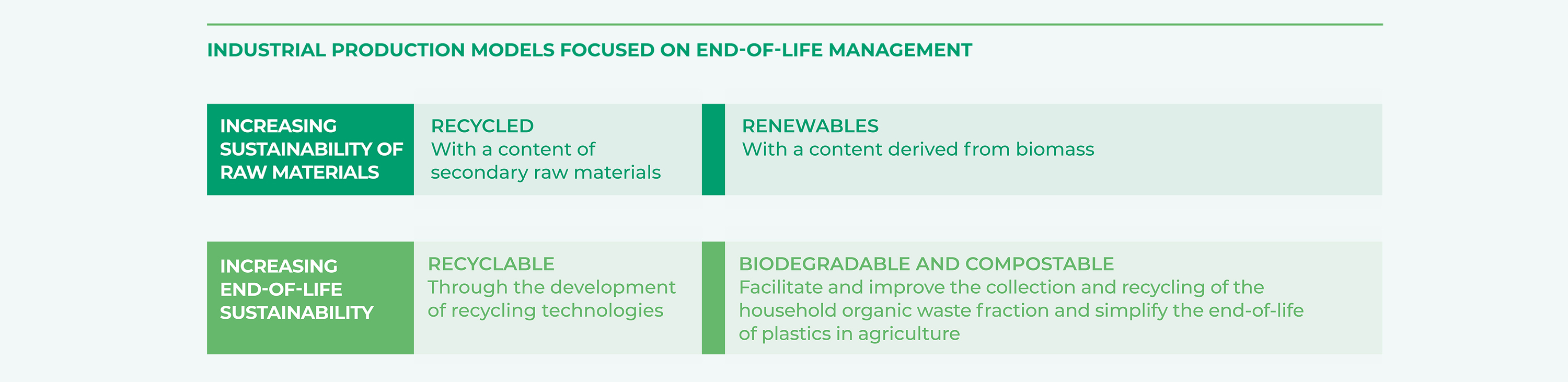
Circular economy value chain

We consider the entire polymer life cycle and the main areas of development in support of the circular economy are:

  • recycling technology development: we develop complementary mechanical and chemical recycling technology, utilising our Research and Development Business Unit and in partnership with supply-chain stakeholders;
  • feedstock diversification: we seek new opportunities to use alternatives to conventional feedstocks to obtain low-carbon solutions.

Our circular projects

We develop complementary mechanical and chemical recycling technology for plastics and rubbers to promote the circularity of our products.

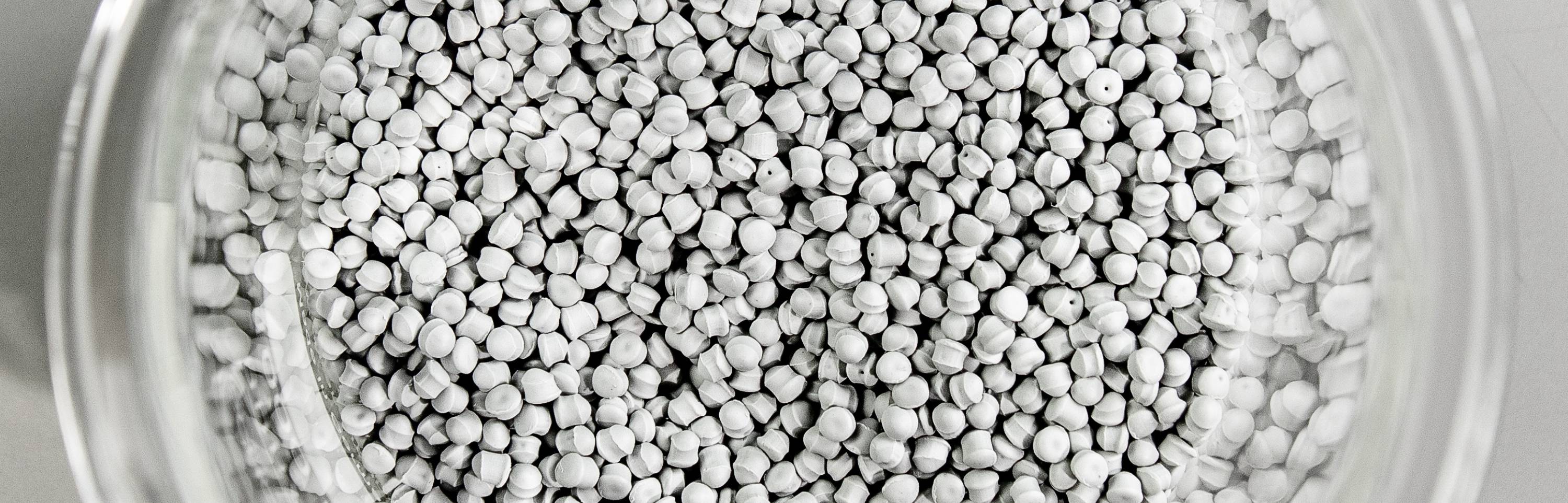
Mechanical recycling is an established technology involving collection, sorting and processing of plastic waste that is thus converted into secondary raw materials. Recycled plastics can be blended with virgin materials to create new products. We are turning the il sito di Porto Marghera site into the Versalis mechanical recycling hub, extending the Versalis Revive® range containing up to 100% recycled plastic.

On the other hand, chemical recycling breaks down polymers into their building blocks, thus allowing the production of recycled plastic with virgin plastic properties that can be used in demanding applications, such as food contact. This technology can deal with plastic waste streams that are unsuited to mechanical recycling, recovering resources that would otherwise result in incineration.

Versalis_Revive_3000x963.jpg

Versalis Revive®

Versalis Revive® is a product line with different base polymers (styrenics, elastomers and polyethylene) whose feedstock is sourced, wholly or in part, from collected, sorted and mechanically recycled post-consumer plastic and rubber. Versalis Revive® products have been developed at the Versalis Research Centre in Mantua in association with supply-chain players and consortia. These innovative products are used in various sectors, such as packaging, construction and consumer goods, giving new life to waste plastic and rubber.

Versalis Revive® PE

Versalis Revive® EPS

Versalis Revive® PS

Versalis Revive® ESBR

Versalis Revive® DVC

Refence®

Refence® is the range of mechanically recycled polymers for food-contact packaging, polystyrene applications, such as yoghurt pots, fish and meat trays, and other types of rigid and expanded-foam packaging.

Learn more about Refence®

hoop-video.jpg

Hoop®

Hoop® is the symbol of circularity par excellence: this is the name of the Versalis project to develop new chemical recycling technology for plastic waste.

The SC-Hoop® project is designed to convert post-consumer mixed plastic into feedstock to produce new polymers, serving as a complement to mechanical recycling. In June 2025, we opened a demonstration plant at the Mantua site, based on our proprietary Hoop® technology, with an input processing capacity of 6,000 tonnes of secondary feedstock derived from mixed plastic waste. The plant marks the first step in the technology’s development and will evaluate its industrial-scale feasibility. We have also submitted an application to build a plant in Priolo.

The result of a joint project with the Italian engineering company S.R.S. (Servizi di Ricerche e Sviluppo), Hoop® is pyrolysis-based chemical recycling technology used to produce a recycled oil (r-Oil) that can replace the current feedstock to obtain new polymers suitable for all applications.

SC-Hoop® was the sole Italian project to receive a grant from the 2023 EU Innovation Fund* for the demonstration of innovative low-carbon technology.

*Sole Italian application to receive a grant under the terms of the 2023 third call for large-scale projects.

fascia-desktop-natural-power-life.jpg
fascia-mobile-natural-power-life.jpg

Funded by the European Union. Views and opinions expressed are however those of the author(s) only and do not necessarily reflect those of the European Union or the European Climate, Infrastructure and Environment Executive Agency (CINEA). Neither the European Union nor the granting authority can be held responsible for them.

feedstock-sostenibilita-versalis.jpg

Alternative Feedstock

Versalis is committed to seeking new diversification opportunities by using renewable feedstocks in its products alongside and as a replacement for conventional ones. More specifically, as the regards the use of biomass, Versalis implements integrated technology platforms by creating synergies between its own projects (including those of Novamont), those of other Eni Group members and other stakeholders.

The Balance® product range

To this end, we have developed Balance®, the new Versalis product line in which alternative feedstocks partially replace conventional ones:

  • Balance® BA (Bio-Attributed) using bionaphtha obtained from vegetable oil;
  • Balance® BCA (Bio-Circular Attributed) using bio-circular naphtha obtained from organic byproducts or waste, such as used cooking oil;
  • Balance® CA (Circular-Attributed) using pyrolysis oil obtained from chemical recycling of plastic waste that cannot be mechanically recycled.
3loghi-mass-balance.jpg
balance3-mobile-logo-sostenibilitadiprodotto-versalis.jpg

The Versalis family of ISCC PLUS*-certified products includes monomers, intermediates, and polymers (polyethylene, polystyrene and elastomers) made from bionaphtha and oils obtained from chemical recycling processes whose specific sustainability attributes depend on the initial feedstock utilised. Balance® grades offer identical performance, quality and properties to standard products, sharing the same chemical composition and physicomechanical performance.

The availability of bionaphtha stems from the merger with Eni that has converted two refineries in Porto Marghera, Venice and Gela to biorefineries, ensuring a supply of more sustainable feedstock originating from vegetable oil, used cooking oil or other types of organic waste.

* ISCC PLUS is an internationally-recognised voluntary certification scheme run by ISCC (International Sustainability & Carbon Certification) that enables businesses along the entire value chain to obtain products from alternative feedstocks using the Mass Balance approach, even when their physical segregation from conventional feedstocks is not possible, by checking compliance with sustainability, traceability and mass balance requirements.

Biochemicals

We are committed to strengthening our competitive positioning in the biochemicals sector by creating synergies between research projects and developing integrated technology platforms. Through the use of renewable feedstock, we offer chemicals and polymers entirely or partially derived from biomass, thus reducing reliance on fossil-based feedstock. The acquisition of Novamont, a leading player in the circular bioeconomy sector and production of biochemicals, biodegradable and compostable bioplastics, bioagricultural products, biolubricants and biocosmetics, provides a great opportunity to help accelerate the product-portfolio decarbonisation strategy.

Please see the Biochemicals section for further details

Value-chain synergies for a more sustainable transition

Establishing partnerships and cooperation across the entire value chain is currently the most effective way to tackle the challenges of a more sustainable transition and achieve our ambitious targets. In this new landscape, the chemical industry is called upon to play a key role: ranging from supplier to catalyst of change, as a result of its scientific expertise, technological innovation skills and its capacity to implement integrated solutions.

Against this backdrop, Versalis continues to promote and develop partnerships with a range of stakeholders. One example is its joint venture with Vesta, entering the furniture and home décor sector with the new ReUp® brand whose products are composed wholly or in part of recycled or renewable plastics.